On Monday, May 1, the New York City Council approved a far reaching set of zoning changes to smooth the path for building owners to adopt new, green technologies. The Council’s visionary goals are described on the Department of City Planning website:
“[These changes will] remove zoning impediments to the construction and retrofitting of green buildings. [They will] give owners more choices for the investments they can make to save energy, save money, and improve environmental performance. This proposal will help bring our buildings into the 21st century while protecting the character and quality of life of our neighborhoods.”
To examine the ways the new zoning may re-shape the city, the New York Times hosted a Q and A with Howard Slatkin, director of sustainability for the Department of City Planning, and Paul Freitag, the director of development in New York for the Jonathan Rose Companies. Among the likely effects: more green roofs, quicker adoption of solar, and new efficiencies in heating and cooling.
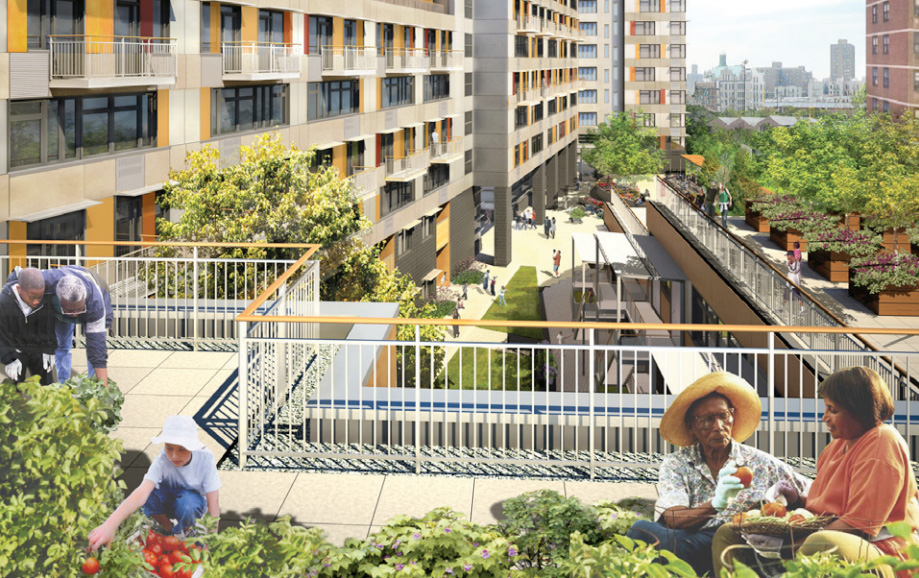
The aggregate transformation for New York, through the opportunity for step-by-step changes in thousands of individual buildings, can be pivotal as the city moves to become more resilient. More green roofs help control runoff from storms, better heating and cooling will lower New York’s per capita CO2 footprint (already, thanks to the MTA, among the lowest in the US), and more opportunities for rooftop farms mean a more vibrant and livable city.
(Image of the new Via Verde development in the Bronx: Jonathan Rose Companies)