In 2011, a proposal was submitted for a long-overdue replacement of the Tappan Zee Bridge and is now on the fast track to completion after being approved by the Obama administration for expedited federal review. This means work on a new bridge could begin as early as the spring of 2013, according to an article by the New York Times. But what will happen to the old bridge?
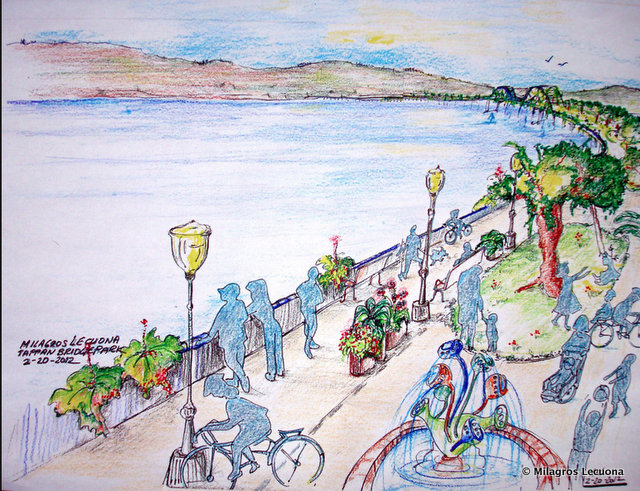 There are several advocates thinking of the possibility to transform the decaying bridge into a public park. The main force behind this is the Tappan Bridge Park Alliance, created by Paul Feiner and Milagros Lecuona. Lecuona, an urban planning professor at Columbia’s Graduate School of Architecture, Planning, and Preservation, led a class of Master’s students for a semester-long studio researching the political, socio-economic, and urban planning implications of converting the bridge into a park. According to the Alliance, these students are working towards developing a plan and drafting guidelines for an international design competition, which Lecuona recommends as the way to guarantee that the Tappan Bridge Park will become an international destination. Students in an advanced urban theory class at Cooper Union, led by Lalia Seewag, were also asked to come up with design ideas for the park.
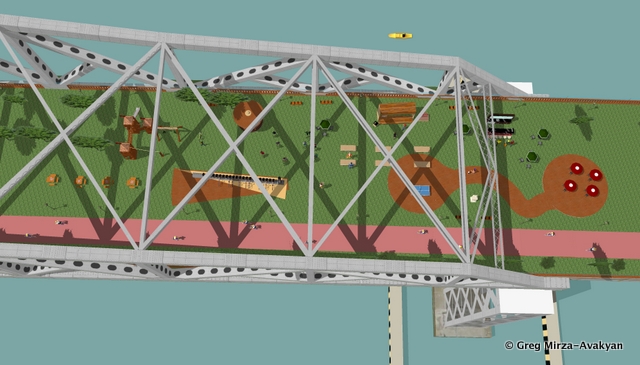
These student projects garnered enough attention to make the idea of a Tappan Zee park an option worth exploring, at least for now. It might seem like a pretty far-fetched idea, but the project has two successful predecessors: the High Line in Manhattan and Walkway over the Hudson in Poughkeepsie, which have proven that adaptive reuse can be both sustainable and profitable for the surrounding communities. Both projects involved the conversion of railroad tracks into parks and were initially ridiculed, but received a lot of interest within their communities and fostered economic growth. This Tappan Bridge project could benefit both sides of the Hudson in Rockland and Westchester Counties.
After all the creative ideas are bounced around, there are many factors to consider to make this project a reality. It costs $50 million for annual maintenance just to keep the bridge in its current condition of disrepair and there are serious long term structural concerns that would have to be addressed. Even without cars, foot traffic and additional features such as trees, planters, and new railings would put additional stress on the structure. But, as with any project, there are always pros and cons to consider, and there are many benefits, some unable to be measured with dollars and cents that give this project great potential. As the saying goes, one man’s trash is another man’s treasure.
You can read more about this at the New York Times and Untapped Cities.
Photos: Tappan Bridge Park Alliance.