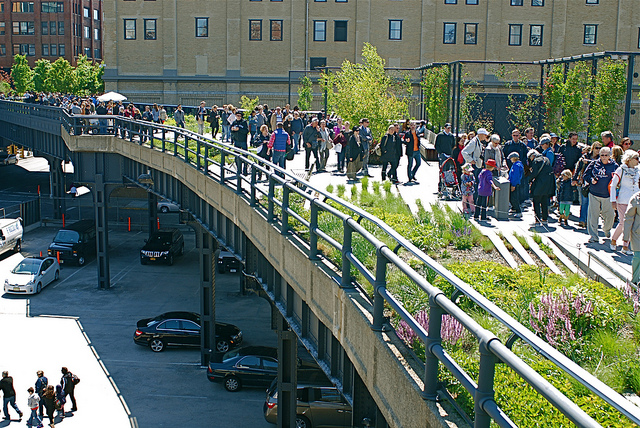
You may not realize it, but when you walk the High Line, below your feet is an intricate drainage system that helps to reduce storm water runoff and helps to keep our planting beds healthy.
The High Line’s landscape uses some of the same underlying technology as green roofs, and has the same environmental benefits: a reduction of storm-water runoff by up to 80%, a mediation of the “heat island” effect created by hard, reflective city surfaces, and healthy plantings that create shade, oxygen, and habitat for insects and birds.
The average depth of the soil on the High Line is about 18 inches, with the depth ranging between 8 inches at its shallowest to 36 inches in the raised planting beds near Gansevoort Street, the 23rd Street Lawn, and in the Falcone Flyover, between West 25th and West 27th Streets. Because of the shallowness of the soil, water is of special concern – it’s easy for the moisture balance in the soil to become too dry or conversely oversaturated. Thankfully, the design team, led by landscape architects James Corner Field Operations, designed a green roof-style drainage system that both deals with the issues of excess rainfall or drought and helps to create a healthier environment for the High Line’s plants.
The concrete pathway system you’ll find throughout the High Line was designed both to reduce storm water runoff and reduce the amount of watering needed for the plants. The paths are made of open-jointed pre-cast concrete planks that allow rain water to drain between planks and into adjacent planting beds. Perforated metal panels located between the planting beds and the area beneath the walkways allows for rain water to drain into the plant beds. The strategic location of drains at low points in the planting beds means that water can be absorbed into the beds when it’s needed, or drained out in the case of the soil being oversaturated.
Beneath the finer more nutrient-rich topsoil that our plants call home, there are many other layers that help maximize healthy water drainage, while slowing and reducing the flow of runoff. After the initial topsoil, there is a thick layer of specially-mixed coarser, clay-based subsoil. Below the subsoil is a filter fabric that helps prevent soil from being washed away where it might clog the drainage system. Following the filter fabric is a drainage mat filled with crushed gravel to temper the flow of excess water into the sewer system.
The drainage mat also acts a reserve of water that can be called upon when needed. When excess water drains all the way through the planting bed, some water is retained in this bottommost layer, in the egg carton-shaped cups of the drainage mat. These cups retain water that can be reabsorbed by the soil during drier times.
Similar types of drainage systems can be found in many other green roof projects around the world. The High Line’s drainage system means that less rainwater is making its way into our sewer systems and less water is needed from the city to water our plants – making for both a greener New York City and greener planting beds on the High Line.
————–
via High Line Blog, visit for more behind the scenes images!
Photo courtesy nyclovesnyc