In the process of protecting birds, you protect plants and insects and fish, and you protect the whole system, and in the end, even people.
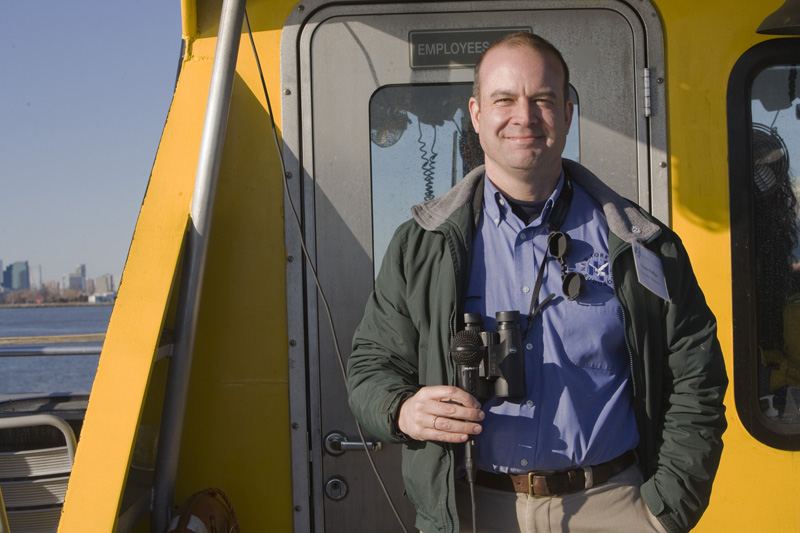
Glenn Phillips is the Executive Director of the New York City Audubon. It is not, as many wrongly assume, a “society” – though it is affiliated with the National Audubon Society. The NYC Audubon is just an “Audubon” – the name carried by John James Audubon, the Haitian-born, French-American ornithologist who painted birds into the world’s subconscious and lived his last years in Washington Heights. Today, Audubon means birds and the NYC Audubon means birds in the 5 boroughs. Of course, that’s only part of the story.
So, are you strictly birds?
We are a bird conservation organization. Birds is what the Audubon name brand implies. That said, my own background is in plant ecology, so I’m interested in using birds to protect plants. Native plants, particularly the rare ones, can be uninteresting to the general public. They’re kind of esoteric. Birds are beautiful and active and they fly. They capture people’s imaginations. Birds are a great stand-in to protect whole ecosystems. In the process of protecting birds, you protect plants and insects and fish, and you protect the whole system, and in the end, even people.
Do you have a favorite New York City bird?
There are so many really cool birds in New York City, but one of my favorites, it’s not the most beautiful bird in New York City, is the catbird. They nest in all five boroughs and in almost every major park. They are not shy birds. You can really watch them do their thing. I think I feel some kinship with them because they make really messy nests. That’s one of the ways you can identify them, by how sloppy they are. They are very sophisticated urban birds, I think.
OK, but what’s the weirdest bird you’ve seen around here?
The most interesting bird I’ve seen in New York City is the Scott’s Oriole, which is a southwestern bird, a bright orange and black bird. There was one in Union Square a few winters ago. Weird bird in a weird place. But it’s New York City.
Do you feel sympathy for pigeons?
I do. Pigeons have all sorts of neat behaviors. They’re abundant in the city, and I feel like they’re a critical piece of the food chain in New York City. I think that’s one of the really important things about pigeons — they’re food for other birds.
 Does anybody eat them?
 Does anybody eat them?
Lots of birds do — the wild ones.
No, no. But what about people. Are people, you know, hungry people on the street, catching pigeons and eating them?
I’ve never heard of anyone catching pigeons as a food source. I have heard of people catching pigeons to sell to hunters. There are places where people will release pigeons to hunt for sport. It seems sad to me. It doesn’t seem quite right to be capturing pigeons in New York City just to ship them somewhere else so they can get shot. I certainly don’t approve, and I’m not sure it’s legal.
[pullquote align=”left”]New York City is particularly well-sited on the Atlantic Flyway. It’s really a great destination for birdwatching.[/pullquote]There’s a rumor that all New York City sparrows can be traced back to a group of sparrows that were brought over in the 1800s by a single crazy Shakespeare fanatic. Are you familiar with this story?
That story is actually starlings, not sparrows. Yes, Schieffelin introduced starlings and he was trying to introduce all of the birds of Shakespeare to New York City. None of the other species survived, mostly because a lot of them are migratory species. You take a migratory bird out of its migratory pathway and it doesn’t know what to do with itself. Starlings are not migratory birds, and although they were slow to get started, they eventually became ubiquitous. They can be quite problematic, so I’m not proud that New York City is one of the first places where starlings were introduced in North America. It’s possible that every starling in North America descended from Schieffelin’s starlings.
But what about sparrows, the other bird you just can’t miss in NYC?
 But what about sparrows, the other bird you just can’t miss in NYC?
House sparrows were introduced from Europe to a few parks in Manhattan and Brooklyn. There were thousands of horses pulling things down our streets back then, which meant there was a lot of horse manure, which meant there were a lot of flies. House sparrows were the solution – they are comfortable living in urban settings, and people thought they’d eat a lot of flies. In fact, house sparrows are primarily seed eaters. Now they’re a major agricultural pest.
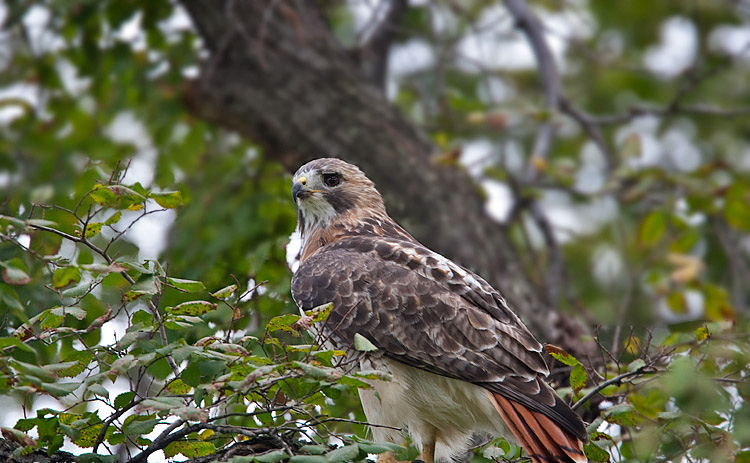
OK, but what about falcons and hawks. I’ve read that a number of hawks have been found dead on the NYC streets.
Four have died recently.
A lot of people say rodenticides killed them. Do you think rodenticides are to blame?
In all likelihood, yes. Rodenticides are by far the biggest culprit in the death of adult birds in New York City. A few years ago, a study was conducted that found vehicle collisions to be the number one cause of death for young birds, especially when they are learning how to fly. But for adult birds, rodenticides are a big problem. The biggest culprit is a killer chemical brodifacoum, the active ingredient in d-Con. It’s incredibly toxic stuff and it causes a huge number of accidental poisonings, primarily in other wildlife, but also in people and pets. There are other rodenticides out there that are equally as effective for rats, but less deadly for birds.
So what should the city do?
I think brodifacoum should be banned outright everywhere. I certainly think there’s no reason why anyone should be using it in New York City. In fact, the EPA has tried to ban over-the-counter sales and the parks department has agreed not to use it. Even the city’s foremost expert on rodent control agrees that it’s not necessary to use brodifacoum in New York City. Unfortunately, the outrage hasn’t stopped the people who live across the street from putting it out in front of their homes. Also, concessions and other third parties in park space continue to use it.
What about cats? Aren’t cats the best organic form of pest control?
 What about cats? Aren’t cats the best organic form of pest control?
No, cats kill small animals. Cats kill birds. One study found that a single well-fed housecat – it wasn’t feral, it had a home – killed over a thousand birds and small mammals in a single year. It didn’t need to eat them, it didn’t eat them for food. It killed them because that’s what cats do. Cats live healthier, longer lives and they do less damage to the environment when they’re kept indoors. They are not wild animals, they are an exotic, invasive species, and they belong indoors.
[pullquote align=”right”]Asking a person to get excited about a teeny tiny bird that’s at the top of a tree that you can barely see is hard work to do. Start with the big things: herons and egrets[/pullquote]Back to birding. Where can I find some birds in NYC and when should I go looking for them?
New York City is particularly well-sited on the Atlantic Flyway. It’s really a great destination for birdwatching. Some of my favorite places to go: Prospect Park in Brooklyn, Central Park in Manhattan, Jamaica Bay – Jamaica Bay Wildlife Refuge is a spectacular place for birding – Cortland Park in the Bronx, the New York Botanical Garden in the Bronx, Alley Pond Park in Queens, and Clove Lakes Park in Staten Island. I’d also say Conference House Park in Staten Island. I’ve given you a huge list already. There are dozens of spectacular birding sites in the city. Check out our website for a list.
As for when you should do it: Now. There is almost not a bad time to go bird watching in New York City, but some times are more spectacular than others. Early May might be the best. Starting at the beginning of May and running until about the third week of May, the bulk of migratory birds pass through New York City. The diversity in the spring is highest. Usually, around May 12 is peak diversity in New York City. Of course, the same thing happens in the fall migration: the birds that came through on their way north in the spring – and then some, because they’ve got all the young coming with them — return on their way south. There are a lot more birds going south than going north. The drawback in the fall is that they take their time, so they come through in waves, whereas you get this huge pulse of birds moving through in the spring.
[pullquote align=”left”]As for when you should do it: Now. There is almost not a bad time to go bird watching in New York City, but some times are more spectacular than others. Early May might be the best.[/pullquote]It’s been a pretty early spring. Is the peak going to arrive earlier this year?
Well, it’s been coming a few days earlier, but not significantly earlier, because the birds aren’t making their decisions to migrate based on the temperatures here. The signals they respond to occur where they are, in the near tropics – the Dominican Republic, Honduras, Brazil — down there, not here.
Well your organization clearly loves birds, and so do I. But some people just don’t get it. What can we do for these people to show them the, ahem, flight?
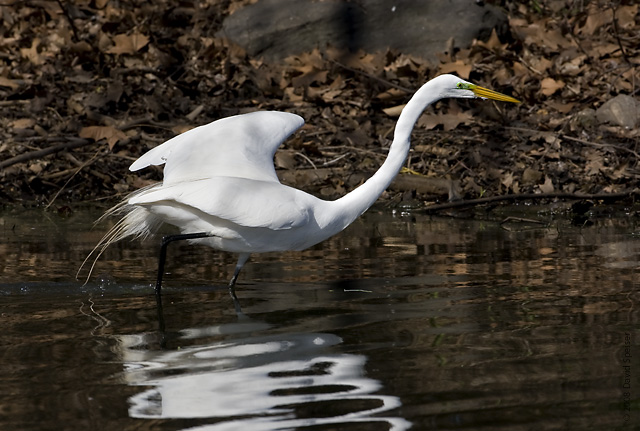
First, start with easy stuff. Asking a person to get excited about a teeny tiny bird that’s at the top of a tree that you can barely see is hard work to do. It may not be worth it. But take your friend out to a wildlife refuge in the next few weeks. Huge numbers of snow geese are gathering on their way north; big, easy-to-see birds. Start with the big things: go out on one of our sunset eco-cruises in summertime and see the herons and egrets coming back to their roosting sites. These are big birds. Big birds are a good place to start.
[pullquote align=”right”]When you learn how to pay attention to details, looking at birds, you can pay attention to details looking at anything.[/pullquote]I don’t know. I’ve seen how New Yorkers react to Canada geese.
Canada geese elicit a wide range of responses from people, because they’re a little overabundant. If you’re somewhat new to birdwatching and you’re not well-trained to help people find birds and know what they’re looking for, it can be frustrating. Get your friends out to Jamaica Bay. Get them out to Bryant Park with a professional. We do walks there with the Bryant Park Corporation. Train yourself to use binoculars, to know how to look at birds. Learn how to pay attention to details you might not ordinarily see.
 When you learn how to pay attention to details, looking at birds, you can pay attention to details looking at anything. I think that too often people don’t pay attention to the details. They gloss over things, they make generalizations and they fail to understand what’s really happening. We make critical mistakes managing ourselves and our world when we do that. To me, the answer to the problems of modern civilization is birdwatching.
About Glenn Phillips:
Glenn began working in the environmental field at the tender age of eight, when he launched a traveling environmental education program by bringing his collection of reptiles and amphibians to local kindergarten classes for hands-on presentations. At about the same time, he began watching and learning about birds, inspired by the burrowing owls, western meadowlarks, and loggerhead shrikes that inhabited the fields between his home and his school in northern California.
Before joining NYC Audubon, Glenn helped establish the Prospect Park Audubon Center, which was recognized as the premier site in Brooklyn for environmental education from its opening in 2002. Glenn was also responsible for coordinating activities with the Lefferts Historic House and the Brooklyn Academy of Science and the Environment, a public high school operated in partnership with the Brooklyn Botanic Garden and the NYC Department of Education; he has also worked at the New York Botanical Garden (in the Bronx).
___
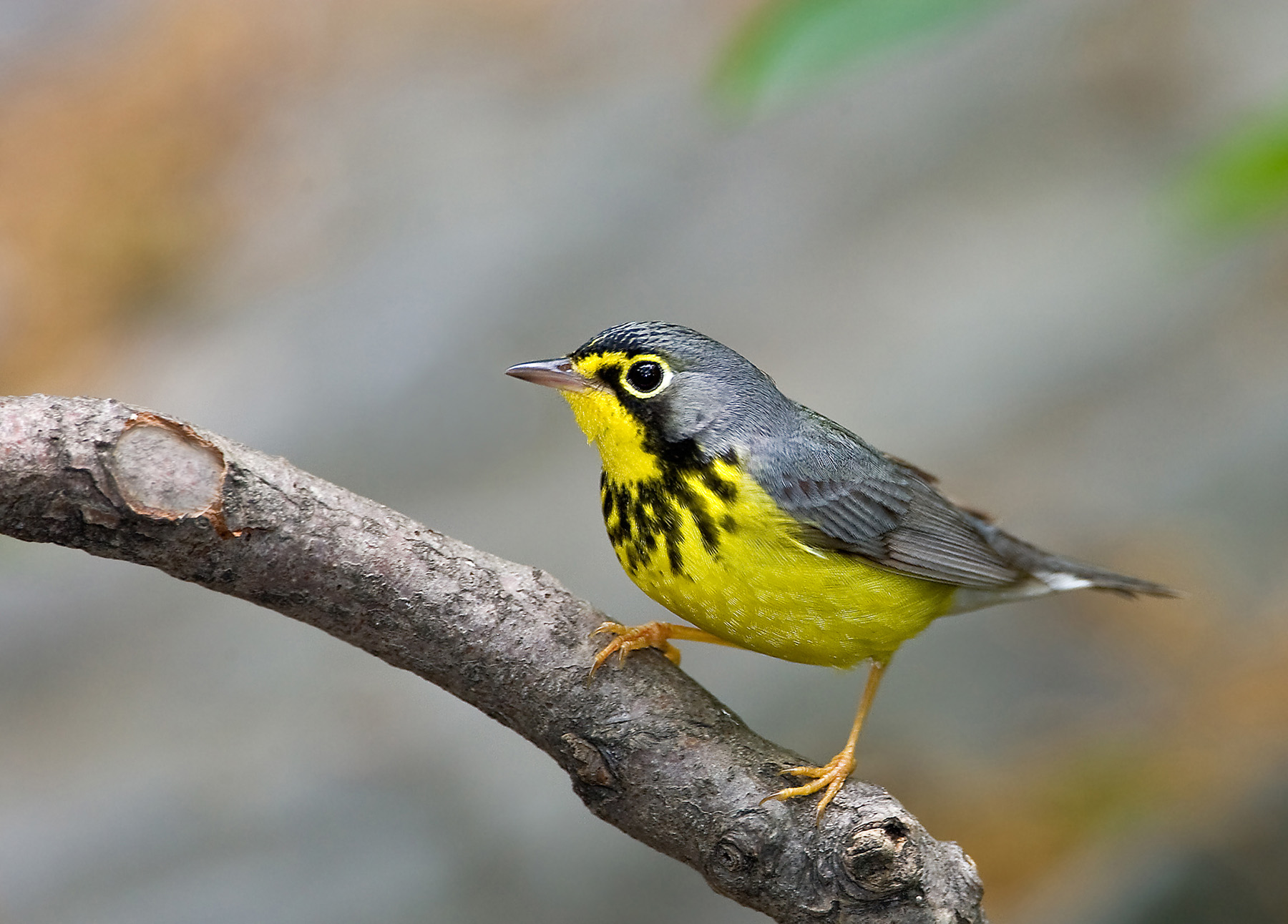
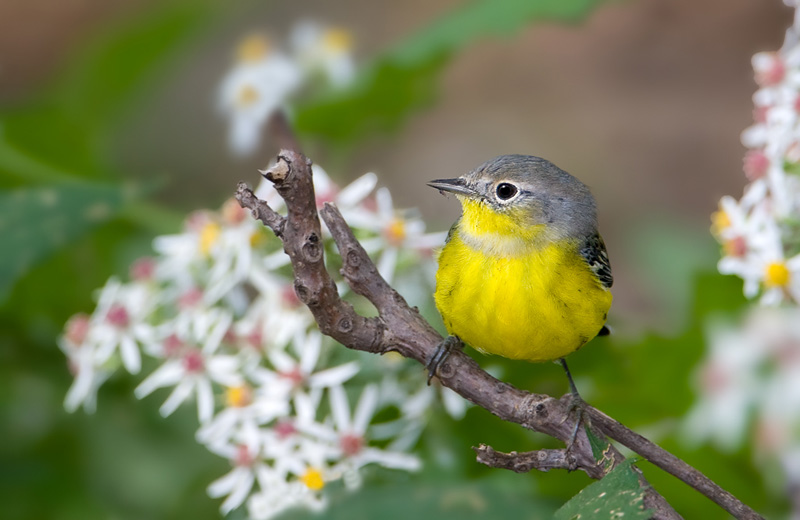
Photos of Canada Warbler, Red Tailed Hawk, and Great Egret by David Speiser (lilibirds.com)
Photo of Glenn Phillips by Maureen Drennan
NYC Audubon Hawk-Cam
NYC Audubon on “Birding in New York City” — “Few people associate New York City with wildlife or birdwatching, but the truth is that in the City’s parks and green spaces, and along portions of the 578-mile waterfront, you’ll find some of the best places in the world to watch birds.”