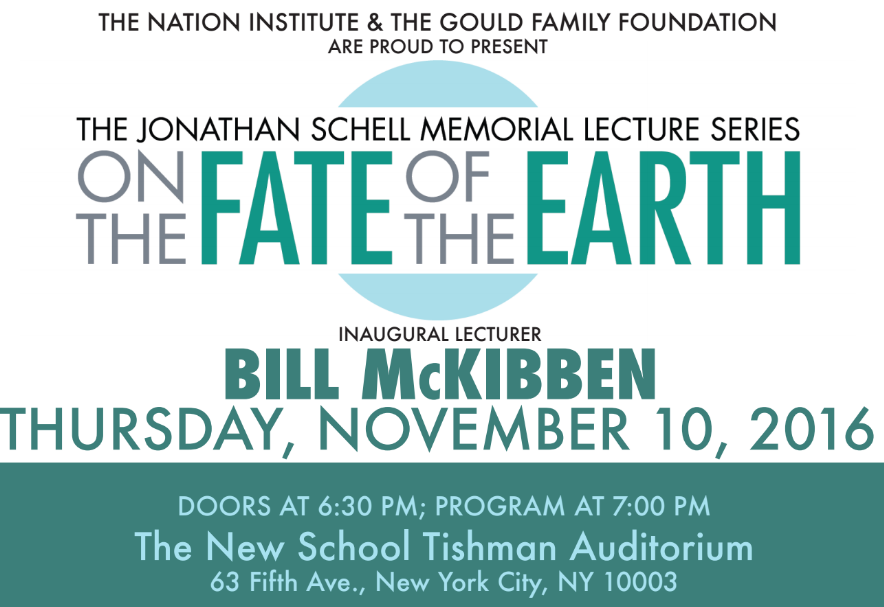
Bill McKibben on the Fate of the Earth
On Thursday, November 10, Bill McKibben will give the inaugural Jonathan Schell Memorial Lecture on the Fate of the Earth at the New School in New York City.
Free
On Thursday, November 10, Bill McKibben will give the inaugural Jonathan Schell Memorial Lecture on the Fate of the Earth at the New School in New York City.
The CUNY Institute for Sustainable Cities at Hunter College will be hosting a presentation by Eric Sanderson to discuss the Mannahatta and Welikia Projects.
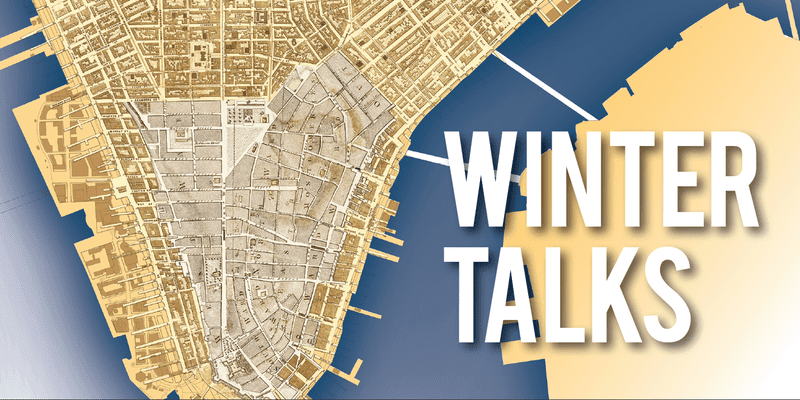
President of cultureNOW, Abby Suckle, presents an illustrated talk on their urban archeology project and the creation of a map showing New York City over time. Learn about the process of surveying our local geographic history and raising questions that need to be considered as we plan a more resilient city in our future.

Jennifer Pan's research shows that the Chinese regime's strategy is to avoid arguing with skeptics of the party and the government, and to not even discuss controversial issues. She will discuss how these results fit with what is known about the Chinese censorship program, and suggest how they may change our boarder theoretical understanding of "common knowledge" and information control in authoritarian regimes.
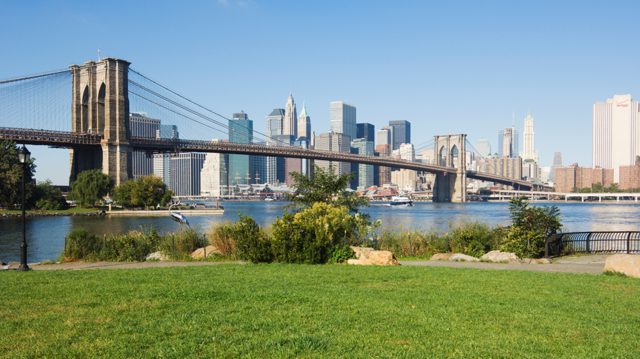
Please join us at Roosevelt House for a special evening exploring the creation of Brooklyn Bridge Park, one of the largest and most significant public projects to be built in New York in a generation.
In their talk, Ms. Witty and Professor Solecki will examine the social and political phenomenon of how a community overcame overwhelming opposition and obstacles to build the park – and also the ways in which the solutions developed during the prolonged battle can be applied to important economic and planning issues around the world. They will discuss how grassroots movement and community planning united around a common vision, and reveal the human dynamics that unfolded in the course of building the park, including attitudes and opinions that arose about class, race, gentrification, commercialization, development, and the role of government.

As required by a 2014 state statute, the New York State Department of Environmental Conservation has just issued official sea level rise projections. They reflect a range of possible scenarios; at the high end, sea level in the New York City area could rise 75 inches (6.2 feet) by the year 2100.This program will explore how these projections, now that they are embodied in a formal regulation, will affect a broad range of decisions in building and infrastructure siting, design, construction and materials; insurance and financing; environmental impact review; and securities disclosure.
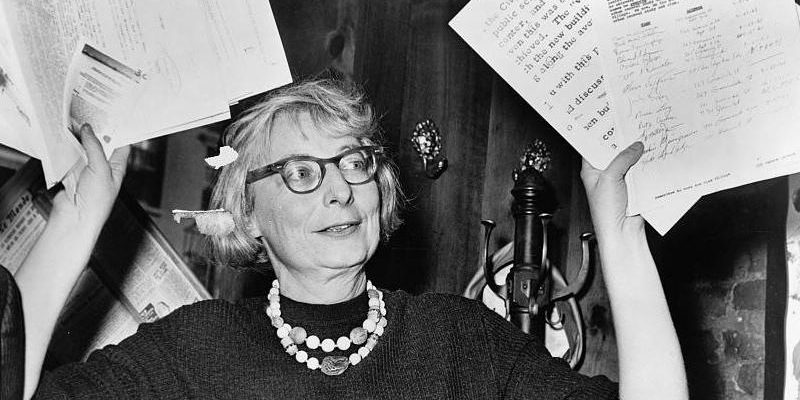
In 1960 Jane Jacobs’s book The Death and Life of Great American Cities sent shockwaves through the architecture and planning worlds. Join us as New York Times columnist Ginia Bellafante talks to Matt Tyrnauer, director and producer of the acclaimed documentary Citizen Jane: Battle For the City, Robert Hammond, Co-Founder and Executive Director of Friends of the High Line, and Dr. Samuel Zipp, Associate Professor of American and Urban Studies at Brown University and co-editor of Vital Little Plans: The Short Works of Jane Jacobs, about Jacobs’ extraordinary impact on the urban landscape.
The Manhattan street grid has been called “a disaster” of urban planning and “the most courageous act of prediction in Western Civilization”. In other words, you either love it or hate it. Join Gerard Koeppel as he relates the history of this uniquely New York marvel through his most recent book.
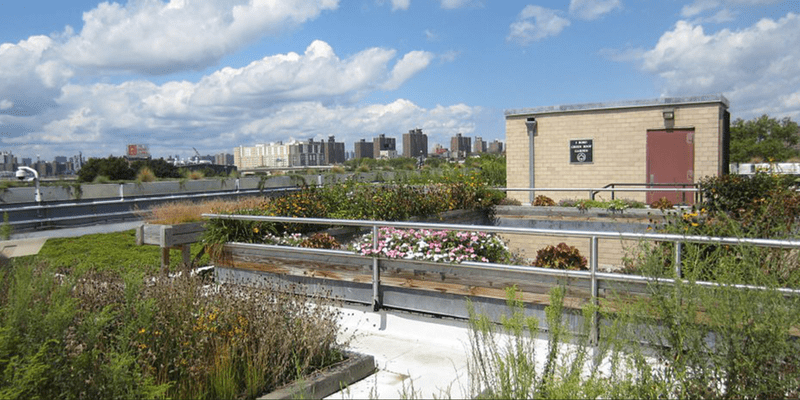
Permaculture has the potential to transform the future, but first we have to bring it mainstream. How do we scale permaculture to redesign the massive agricultural, food, and consumer culture systems for long-term health and sustainability? What is the way forward given the sociopolitical challenges we currently face? How can a focus on local actions collectively alter a global system? Our experts will be discussing these questions and more at our permaculture forum on April 3rd, 2017.
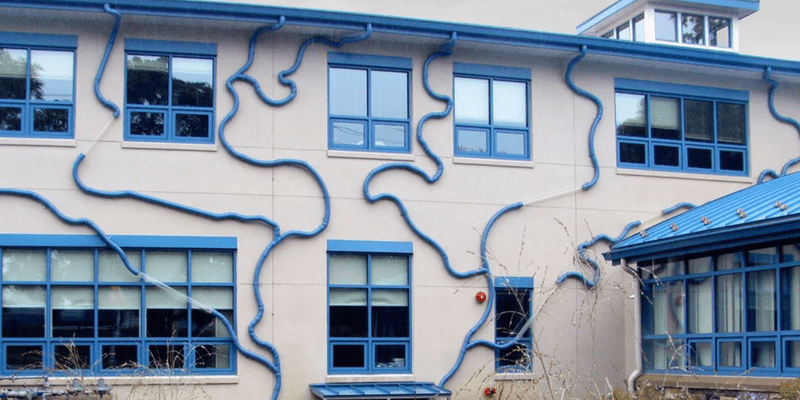
Spend a visually engaging evening with Stacy Levy at a lecture on water, art, and ecology. Levy is an internationally known artist who specializes in creating artful, site-specific interventions and engagements with water ecology. Preceding the lecture, Levy will lead an interactive workshop.
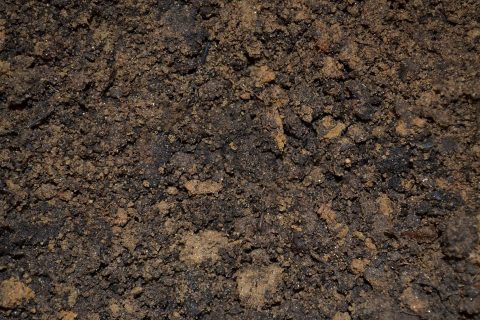
In this panel local soil scientists and practitioners will introduce key soil sequestration concepts; summarize emerging research findings; and provide an overview of urban restoration, compost incorporation and other methods that aim to increase urban soil carbon, while yielding additional pollution and waste reduction benefits.
The Sabin Center for Climate Change Law presents the third David Sive Memorial Lecture on Environmental Law: "The Present and Future of EPA," a presentation by Gina McCarthy, Administrator, U.S. Environmental Protection Agency, 2013-2017.