MAS Spring 2013 Livable Neighborhoods Training
Livable Neighborhoods offers New York City specific workshops on a range of planning topics including resilience building, the use of census data to understand neighborhood…
Free
Livable Neighborhoods offers New York City specific workshops on a range of planning topics including resilience building, the use of census data to understand neighborhood…
May 22nd, climate change's most illustrious leaders, scholars, and researchers will meditate in one place.
SAVE THE DATE: October 17 & 18! The National Park Service, New York City, and City University of New York are pleased to announce the Urban…
Considering the Quake: Seismic Design on the Edge explores the intersection between the aesthetics of architectural form and the technicality of structural design, through the lens of earthquake engineering.
The Individual and Community Preparedness Workshop from Occupy Sandy will present best practices and innovative techniques for preparing the whole community for emergency weather situations.
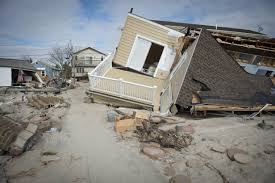
In partnership with NeighborWorks America, 2014’s opening resilience series training will be designing and developing an emergency management program plan for multi-family housing organizations. The successful integration of citizen involvement in an emergency management setting is imperative to prepare for, respond to, recover from, and mitigate the effects of disasters in our communities.
This full day training will address organization and management of volunteers in emergency response, engaging the community, volunteer operations, logistics, communication and records administration.
Now entering its fifth year, the 2014 Summit will focus on the themes of Equity, Place, and Opportunity, addressing the need to create an urban…
Climate-adapted neighbourhoods. Green boulevards. Community food forests.
Around the world, more and more cities are committing to ambitious projects aimed at building resilience in light of climate change.
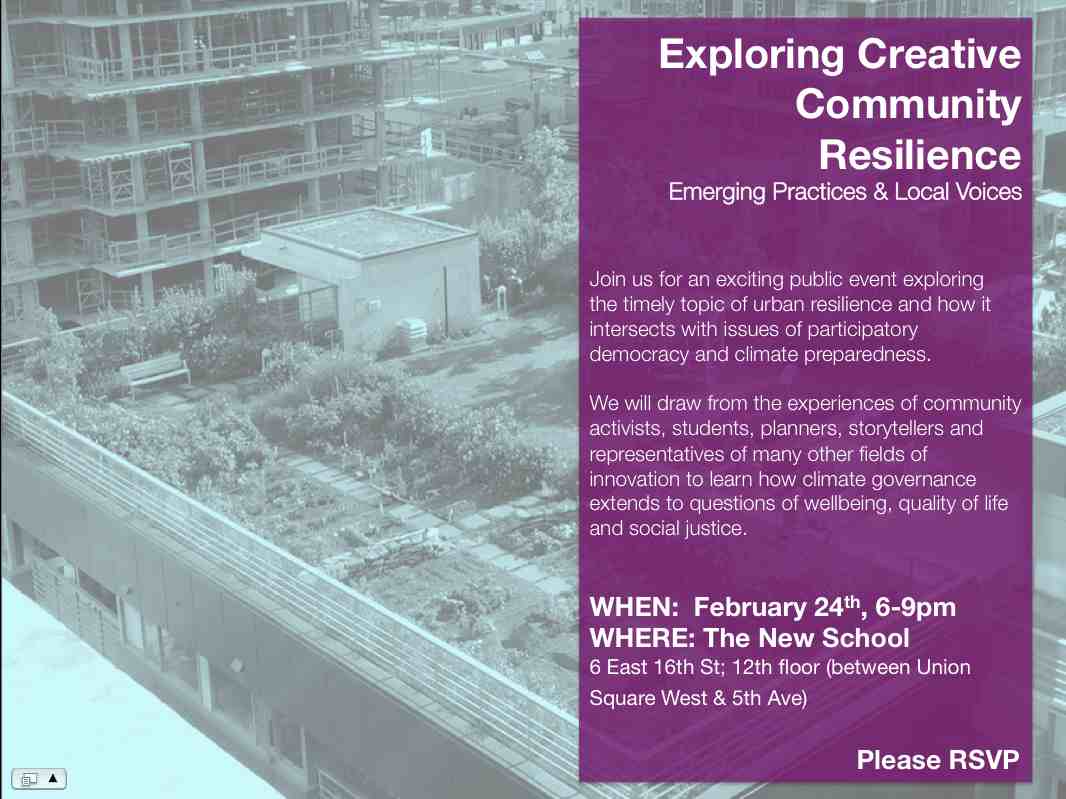
On February 24, 2015 we will convene at The New School to draw from the experiences of grassroots organizers, co-design champions, urban planning professionals, storytellers and representatives from many other fields of social innovation (that’s you!) to explore how to make resilience a collaborative and inclusive process of “civic imagination”.
In keeping with the notion of sankofa—remembering the past in order to move forward—this year’s theme, “Roots of Resilience,” will examine the ways in which sustainability is tradition, not trend.