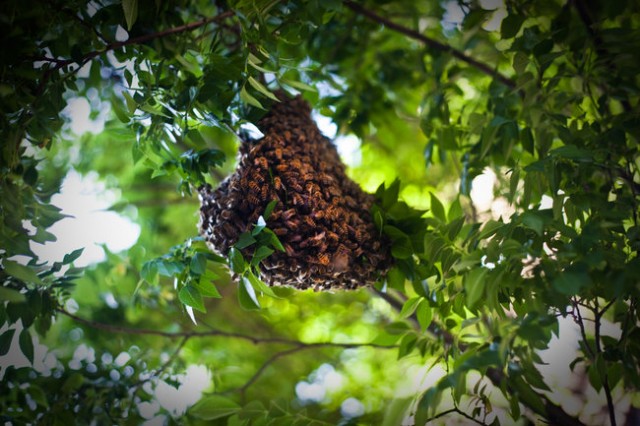
Reports of bee swarms throughout the city already outnumber previous years. If the bee population is declining world wide, why is this happening?
Scientists and armchair experts alike posit that this year’s combination of an unusually warm winter and an early spring contributed to overbreeding, which then resulted in swarms. Dr. Waheed Bajwa, the executive director of the city health department’s Office of Vector Surveillance and Control, believes that the city’s beekeepers are not to blame, though others cite lax beekeepers for overbreeding. If you are a beekeeper, be sure that you know how best to maintain your hive. Experts advise tending to hives every 7-10 days to prevent overbreeding.
Chase Emmons, of Brooklyn Grange Rooftop Farm, advises staying calm if you find yourself in a swarm: honeybees are usually docile, and will not sting without provocation. According to Emmons, “There’s a weird vibe where they have no interest in you.”
311 fields complaints about bees, but you can also contact the experts directly. The New York City Beekeepers Association and www.nycbeekeeping.com maintain swarm hot lines and may take the free bees. You can also check out other resources through City Atlas.
In the meantime, enjoy delicious local honey and rejoice in the resilience of the bee population.
Via: NYTimes
Image: NYTimes